
Views: 0 Author: Site Editor Publish Time: 2026-08-04 Origin: Site
The hair care market is flooded with tools claiming to alter hair growth and scalp health. Consumers naturally approach mechanical stimulation devices with skepticism. However, restricted scalp microcirculation is a physiological reality. Tension, stress, and product buildup exacerbate this restriction, physically constricting the vascular network beneath the skin. Poor circulation limits oxygen and nutrient delivery to hair follicles, creating a suboptimal environment for hair retention. Can a simple tool reverse this?
We must shift from marketing hyperbole to a clinical evaluation of how these tools operate. Mechanical stimulation offers documented physiological responses. This article establishes a framework for buyers to assess efficacy, safety, and appropriate tool selection based on their specific scalp health baselines. You will learn exactly how mechanical pressure influences subcutaneous blood vessels and how to integrate these devices safely into a daily routine.
Circulation Impact: Mechanical stimulation via a massage comb does temporarily increase localized blood flow, which can support a healthier follicular environment, though it is not a standalone cure for genetic hair loss.
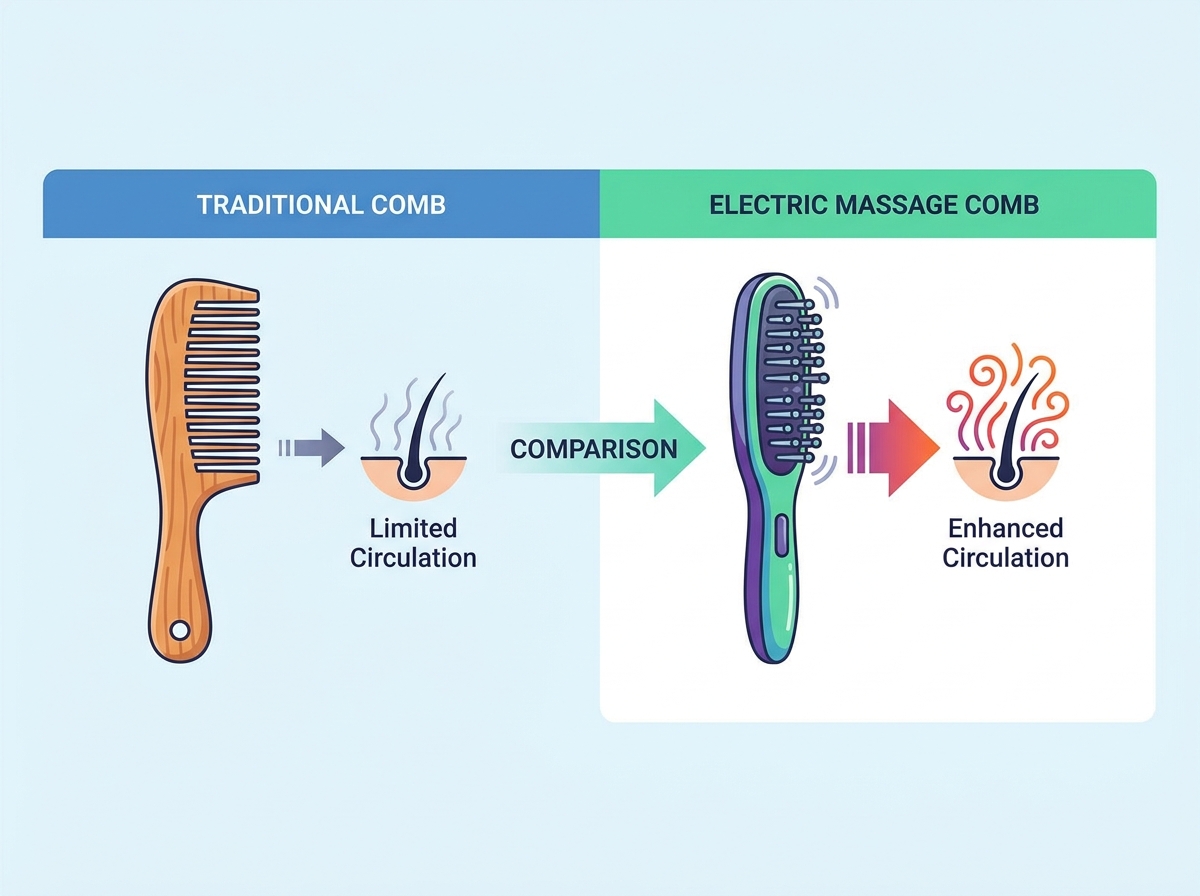
Manual vs. Electric: An electric massage comb offers standardized stimulation and reduces user fatigue, but manual combs provide superior tactile feedback for pressure regulation.
Consistency is the Variable: Clinical observations suggest that frequency and consistency (e.g., 4–5 minutes daily) dictate outcomes far more than the specific price point of the tool.
Tool vs. Fingertips: While fingers are free, a dedicated scalp massage tool prevents fingernail-induced micro-abrasions and provides deeper, more uniform pressure distribution.
Risk Mitigation: Improper use—such as excessive pressure, using the wrong material on wet hair, or poor tool hygiene—can cause micro-abrasions and traction alopecia, negating any circulatory benefits.
A healthy hair follicle requires specific biological conditions to function optimally. Vasodilation is primary among these requirements. Dilated blood vessels ensure adequate nutrient delivery and facilitate the removal of metabolic waste. When circulation slows, follicles enter the resting phase prematurely. The vascular network feeding the dermal papilla is highly sensitive to external pressure and internal tension.
The galea aponeurotica, the scalp’s epicranial aponeurosis, plays a major role here. Chronic muscular tension in this fibrous tissue constricts underlying blood vessels. Relieving this tension is necessary to restore baseline blood flow. We measure improvement through specific metrics. A reduction in scalp tension indicates relaxed musculature. Increased localized warmth points to active blood flow. Finally, a reduction in inflammatory markers signals a healthier epidermal barrier.
Reduction in scalp tightness and physical discomfort during manual manipulation.
Measurable increase in localized epidermal temperature following a massage session.
Decreased incidence of flaking and redness associated with poor cellular turnover.
Improved absorption rates of topical serums and treatments.
Targeted pressure physically dilates subcutaneous blood vessels. When bristles press against the scalp, they compress and release the tissue. This pumping action forces stagnant blood out and draws fresh, oxygenated blood in. The physiological response to this mechanical stress is known as mechanotransduction. Mechanotransduction stimulates dermal papilla cells, which regulate the hair growth cycle. Using a Massage Comb applies this pressure uniformly across the targeted area.
We must separate verified physiological responses from unverified marketing claims. Studies indicate that regular mechanical stimulation can temporarily increase localized blood flow by up to 25%. This is a verifiable metric. However, claims of instant hair regrowth are biologically impossible. The tool optimizes the environment; it does not alter genetics. It acts as a physical catalyst for vascular dilation, much like foam rolling works for larger muscle groups.
Manual fingertip massage presents distinct mechanical limitations. Fingers apply uneven pressure across the scalp. Hands also experience quick physical fatigue, making it difficult to maintain the required 4-minute duration. Consistent force is vital for effective mechanotransduction. When fatigue sets in, users naturally reduce pressure, rendering the final minutes of the massage ineffective.
Hygiene and safety risks further complicate manual massage. Bacteria easily transfer from under fingernails to the scalp. Sharp nail edges frequently cause micro-tears in the epidermal barrier. These micro-tears invite fungal infections and inflammation. Rigid or semi-rigid bristles bypass dense hair strands entirely. They target the epidermal surface directly, ensuring consistent force distribution without scratching the tissue.
Direct user control over pressure and angle defines the manual tool experience. Users can instantly adjust force based on immediate sensory feedback. This prevents accidental over-stimulation in sensitive areas. Manual tools require no charging, making them highly reliable for travel and daily use without logistical overhead.
Material variations significantly impact the friction coefficient on the scalp. Medical-grade silicone provides optimal grip without pulling hair. Polished wood and jade offer smooth gliding surfaces but lack flexibility. Metal prongs deliver intense stimulation but require careful handling to avoid scratching. Manual tools excel for users with sensitive scalps. They also function perfectly in a shower routine for even shampoo distribution.
Functional advantages define the Electric Massage Comb. Consistent oscillation and precise vibration frequencies remove human error from the equation. The motor delivers uniform mechanical stress across the entire treatment area. This standardization ensures that every session meets the baseline requirements for mechanotransduction.
Many electric models bundle secondary features. Red light therapy and heat functions frequently appear on premium devices. Heat functions aid in vasodilation, complementing the mechanical pressure. Red light therapy has clinical backing for cellular stimulation, though device-specific output varies. Electric models suit users seeking a strict, repeatable daily routine. They eliminate manual fatigue and perform exceptionally well for dry-hair applications.
Bristle spacing dictates how the tool interacts with different hair types. Fine or thinning hair requires closely spaced bristles for maximum epidermal contact. Thick or coarse hair demands wider spacing. Wide gaps allow the bristles to penetrate the hair density and reach the scalp without causing tangles. If the bristles cannot reach the skin, the tool is useless.
Bristle tip design is a non-negotiable factor. Rounded or soft-tapered tips prevent epidermal micro-tears. Sharp or poorly molded plastic edges will scratch the scalp. These scratches lead to inflammation, defeating the purpose of the massage and potentially triggering localized hair shedding due to stress.
Bristle Architecture Comparison | |||
Bristle Type | Spacing | Target Hair Type | Primary Benefit |
|---|---|---|---|
Thick Silicone Cones | Wide | Thick, Curly, Coarse | Prevents tangling, deep pressure |
Thin Silicone Pins | Narrow | Fine, Thinning, Straight | Maximum surface area contact |
Rigid Plastic Nodes | Medium | All Types (Dry Use Only) | Intense mechanotransduction |
Grip design and weight determine long-term adherence. A tool that is difficult to hold causes hand cramping. If the device is uncomfortable, users will abandon the 4-minute daily requirement. Ergonomic handles that fit the natural curve of the palm ensure consistent use. The physical design must accommodate wet, soapy hands if intended for shower use.
Electric models require additional evaluation. Battery life must support at least a week of daily use. The charging infrastructure should be convenient, preferably utilizing standard USB-C connections. Waterproof ratings are mandatory if you plan to use the device during washing. An IPX7 rating ensures the motor survives complete submersion.
Material selection directly impacts scalp hygiene. Medical-grade silicone is the industry standard. It is non-porous, preventing bacterial and fungal colonization. Porous materials absorb sebum and water, creating a breeding ground for pathogens. You must verify the material specifications before purchasing.
Cheap plastics present severe risks. Manufacturing seams on low-quality plastic bristles catch and snap hair shafts. Always inspect the bristles for smooth finishes before applying them to your head. Run your thumb across the tips; if you feel a ridge, the tool will damage your hair cuticle.
Wet hair possesses distinct structural vulnerabilities. The cuticle swells when saturated, increasing elasticity. This heightened elasticity makes the hair shaft highly susceptible to breakage under tension. You must alter your technique based on moisture levels. Applying dry-hair techniques to wet hair will result in significant mechanical damage.
Using a tool during the washing phase requires strict protocols. Employ linear movements only. Never use circular scrubbing motions on wet hair, as this causes severe tangling. Press the device down, hold for three seconds, lift, and reposition. Dry scalp massage allows for more fluid, circular motions, provided the hair is thoroughly detangled first.
Detangle hair completely before entering the shower.
Apply shampoo directly to the scalp, not the hair lengths.
Press the tool onto the scalp, apply downward pressure, and hold.
Lift the tool completely off the scalp before moving to the next section.
Avoid all dragging or circular motions while the hair is wet.
There is a fine threshold between beneficial stimulation and harmful friction. Beneficial stimulation warms the tissue and relaxes the muscles. Harmful friction causes redness, soreness, and epidermal damage. You must monitor your scalp's response and adjust pressure accordingly.
Traction alopecia is a serious risk. If you drag the comb through tangled hair rather than pressing it onto the scalp, you apply immense stress to the hair root. This mechanical pulling exacerbates shedding. Always apply pressure downward onto the skin, not outward along the hair shaft.
Sebum, dead skin cells, and product buildup accumulate rapidly on these tools. Ignoring maintenance introduces fungal or bacterial infections directly to your follicles. A dirty tool causes folliculitis, which can lead to permanent follicle damage if left untreated.
Implement a strict cleaning framework. Sanitize the device weekly. Use isopropyl alcohol or mild detergents. Scrub between the bristles with a dedicated small brush. Rinse thoroughly and allow the tool to air dry completely in a well-ventilated area. Never store a damp tool in a dark, enclosed space.
Consumers must weigh the lifecycle of entry-level manual silicone brushes against premium electric models. Manual brushes have no internal components. Their primary failure point is bristle degradation over several years. They offer exceptional longevity and require zero ongoing maintenance costs.
Electric models introduce mechanical failure points. Motor burnout and lithium-ion battery degradation eventually limit the device's lifespan. However, the standardized stimulation often justifies the shorter lifecycle for users prioritizing consistency. You are paying for the guarantee of uniform pressure and the elimination of manual effort.
Mechanical stimulation offers a non-invasive, side-effect-free approach. Systemic treatments carry potential pharmaceutical side effects. A dedicated massage tool provides a chemical-free option for wellness-focused consumers who want to improve scalp health without introducing new compounds to their bodies.
Furthermore, it serves as a powerful adjunct therapy. Using the tool before applying topical hair serums increases localized blood flow. This vasodilation potentially enhances the absorption and efficacy of the topical treatments. The mechanical pressure prepares the epidermal barrier to receive active ingredients more efficiently.
Setting realistic timelines prevents user frustration. Noticeable changes in scalp health and hair quality typically require 3 to 6 months of daily use. Tissue remodeling and follicle cycle adjustments do not happen overnight. You must commit to the process long-term to see structural changes.
The trade-off is clear. The financial barrier to entry is low, but the behavioral cost is high. Daily habit formation is mandatory. Skipping sessions negates the cumulative benefits of mechanotransduction. If you cannot commit to 4 minutes a day, the tool will not yield results.
Mechanical stimulation is a scientifically sound, low-risk adjunct therapy for improving scalp microcirculation. Success depends entirely on correct technique, consistent application, and realistic expectations. It optimizes the follicular environment but requires dedication. The physical act of dilating blood vessels through pressure is proven, but the user must supply the consistency.
Budget-conscious buyers or those focused on in-shower product distribution should select a manual, medical-grade silicone tool. Users with limited hand mobility, or those seeking standardized dry-scalp routines with auxiliary features, should opt for an electric model. Both paths lead to improved circulation if executed correctly.
Audit your current hair care routine to determine your primary use case (wet vs. dry application).
Select a tool featuring verified non-porous materials and rounded bristles to protect the epidermal barrier.
Commit to a strict 90-day trial, utilizing the device for 4 minutes daily to accurately assess circulatory improvements.
Implement a weekly sanitization schedule to prevent product buildup and bacterial transfer.
A: Clinical observations suggest a 4 to 5-minute daily threshold. This duration achieves optimal vasodilation and relieves muscular tension without causing scalp irritation or epidermal fatigue.
A: The physical physiological results are similar. However, electric models ensure consistent, uniform stimulation and eliminate manual hand fatigue, which often leads to better daily adherence.
A: It can dislodge hairs already in the telogen (shedding) phase. However, improper use, such as aggressive circular rubbing on wet, vulnerable hair, causes mechanical breakage and traction alopecia.
A: Both are acceptable but require different techniques. Wet use is best for shampoo lathering using gentle, press-and-lift motions. Dry use is optimal for prolonged, circular circulation massage.
A: Wash it weekly with warm water and a clarifying shampoo or mild soap. Use a soft brush to remove accumulated sebum, then allow it to air dry completely to prevent mold growth.


