
Views: 0 Author: Site Editor Publish Time: 2026-08-05 Origin: Site
Healthy hair begins at the scalp. The physiological connection between scalp microcirculation, sebum distribution, and overall hair health goes far beyond superficial beauty claims. It is rooted in anatomical realities. Yet, the market is saturated with hair tools, making it difficult to find the right one. Using the wrong comb architecture or material can lead to mechanical damage, micro-tears on the scalp, increased frizz, or exacerbated hair fall. To navigate this, you need a structured, evidence-based framework for evaluating and selecting a Massage Comb. This involves looking closely at material science, tooth geometry, and specific hair type requirements. By understanding these factors, you can optimize your daily hair care routine, protect your scalp, and support healthy hair growth without relying on guesswork.
Material dictates friction and hygiene: Wooden combs neutralize static but require careful maintenance; silicone/plastic options excel in wet conditions and dandruff management.
Tooth spacing controls tension: Wide-tooth architectures are non-negotiable for detangling and fragile hair, while finer spacing suits precise styling and sebum distribution on straight hair.
Tip geometry prevents injury: Rounded, polished tips are critical for safe scalp stimulation without causing epidermal micro-abrasions.
Technique amplifies benefits: Targeting specific scalp pressure points using a dedicated massage comb optimizes localized microcirculation.
Context matters: The ideal hair care massage comb changes depending on whether the hair is wet, dry, prone to breakage, or experiencing active dandruff.
A true massage comb serves a dual purpose: scalp stimulation and hair strand management. It differs significantly from standard styling brushes or detanglers. A comb provides specialized utility for precise tasks. You use it to create clean partings, section hair during treatments, and gently detangle curls. Brushes rely on broad-stroke mechanics that can sometimes cause unnecessary tension, whereas a comb allows for targeted, controlled manipulation of the hair shaft and scalp surface.
A properly designed comb acts as a natural conditioning mechanism. It moves natural oils from the scalp down the hair shaft. This process coats and protects the hair cuticle, reducing dryness at the ends while preventing oil buildup at the roots. Consistent use helps maintain a balanced moisture level across the entire length of the hair, acting as a barrier against environmental stressors and mechanical wear.
Mechanical scalp stimulation offers evidence-oriented benefits. Gentle massaging increases blood flow to the hair follicles, delivering essential nutrients and oxygen. While it is not a miracle cure for baldness, this optimized scalp environment can support natural hair growth cycles and improve overall follicle health. Regular stimulation helps maintain the elasticity of the scalp tissue, which is necessary for anchoring hair roots securely.
Executing an effective daily scalp massage involves targeting specific cranial pressure points. Apply gentle directional strokes from the hairline toward the crown. Keep pressure application within comfortable limits to maximize follicle stimulation while avoiding mechanical friction. This technique helps relieve tension and promotes localized microcirculation.
Start at the front hairline and move the comb backward in slow, deliberate strokes.
Focus on the temporal regions, applying slight pressure to stimulate lateral blood flow.
Move to the occipital ridge at the base of the skull, using small circular motions with the comb teeth.
Maintain a consistent rhythm, ensuring the teeth maintain contact with the scalp without dragging the hair.
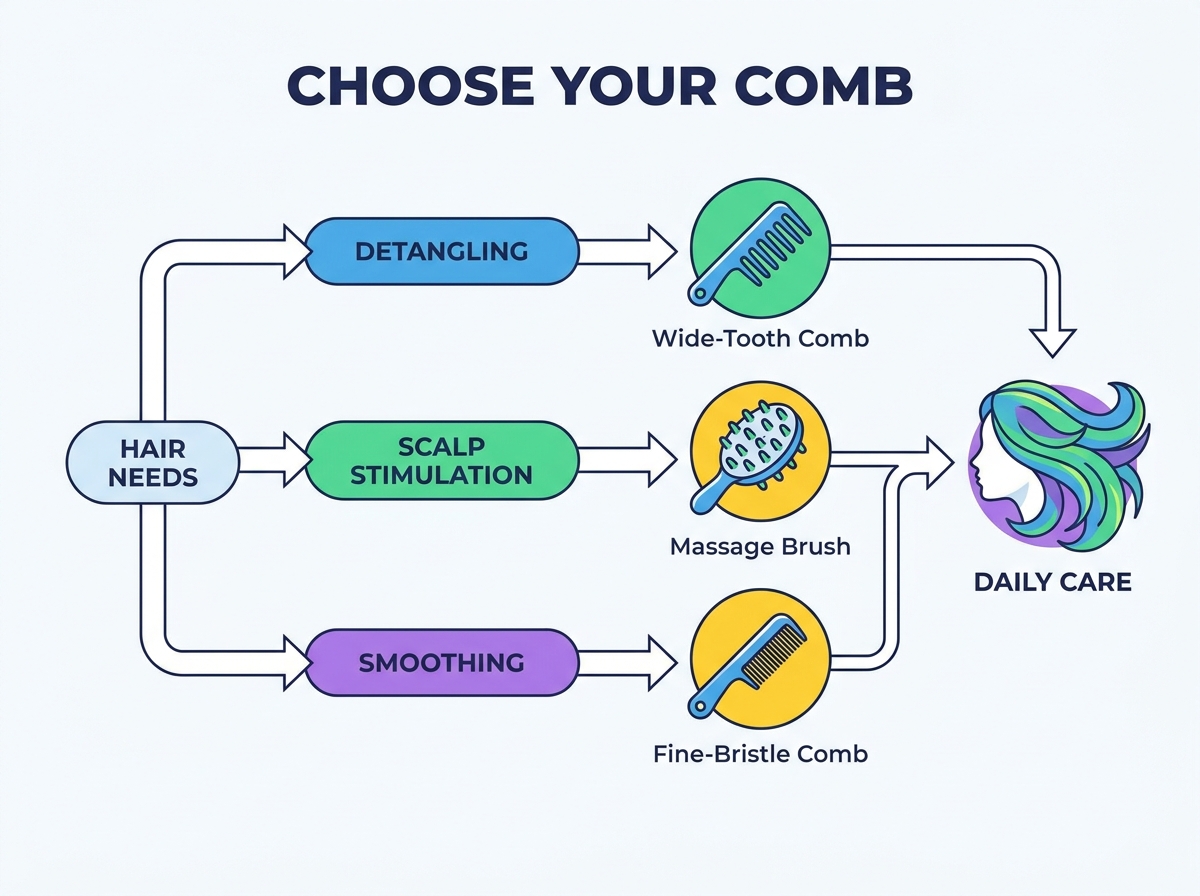
The distance between teeth directly impacts mechanical stress on the hair shaft. Wide-tooth configurations offer low tension, making them ideal for detangling and minimizing pull on weak follicles. Fine-tooth designs create higher tension, which is useful for smoothing straight hair and evenly distributing products or natural oils. Selecting the right spacing is the first step in preventing mechanical breakage during daily grooming.
Tooth Spacing | Primary Function | Best Suited For | Tension Level |
|---|---|---|---|
Extra-Wide | Detangling, curl definition | Thick, curly, or wet hair | Very Low |
Wide | General grooming, minimizing pull | Fragile, thinning, or wavy hair | Low |
Medium | Sebum distribution, styling | Normal to straight hair | Moderate |
Fine | Smoothing, precise parting | Fine, straight, dry hair | High |
Polished, seamless, and rounded tips are essential for scalp safety. Poorly manufactured seams, often found in cheap plastic combs, can snag cuticles and scratch the scalp. These micro-abrasions can lead to irritation, inflammation, and potential bacterial infections. When evaluating a comb, run the tips across the back of your hand; if it feels scratchy, it will damage your scalp.
Grip stability is a critical factor, especially for use in wet environments like the shower. Slippage can lead to sudden, damaging pulls on tangled hair. A well-designed handle ensures you maintain control, allowing for consistent pressure and safe detangling. Look for contoured grips or non-slip materials if you plan to use the comb with conditioners or oils.
Wooden and bamboo combs are naturally anti-static, which significantly reduces frizz. They are porous enough to absorb and redistribute natural oils, environmentally sustainable, and highly comfortable on the scalp. However, they are susceptible to water damage, harder to sanitize, and can splinter if dropped or poorly maintained. They are best used for dry hair brushing, frizz control, and distributing natural oils.
Silicone and high-grade plastics are completely waterproof, easy to sterilize, and highly durable. Silicone offers excellent flexibility. On the downside, standard plastics can generate static electricity, and inflexible plastics can cause breakage if forced through tangles. These materials excel at wet hair detangling, dandruff management, shower use, and applying hair masks or treatments.
Traditional materials like ox horn share a molecular similarity to human hair, as both contain keratin. This allows for a very smooth glide. However, these benefits must be weighed against ethical concerns and higher costs compared to wood or modern synthetics. Horn combs require specific maintenance to prevent drying and cracking over time.
When dealing with fragile hair, the success criteria include minimizing mechanical breakage, protecting weak roots, and avoiding heavy tension. We recommend wide-tooth wooden combs or ultra-flexible silicone massage brushes. During periods of active shedding, a wide-tooth architecture is crucial to prevent compounding follicle stress and minimizing further hair loss. The goal is to stimulate the scalp without pulling on the hair shaft.
For dense hair types, the goal is penetrating the hair to reach the scalp without disrupting the curl pattern or causing snapping. Use extra-wide tooth spacing with seamless acetate or polished wood, primarily with slip from a conditioner. Gently comb through and section curls to define patterns without creating dry frizz. Never force a comb through dry, coiled hair.
Managing dandruff requires gentle exfoliation without bacterial retention. Wide-tooth plastic or medical-grade silicone combs are recommended. Porous materials like wood should be strictly avoided during active fungal or dandruff flare-ups due to sanitization difficulties. You need a tool that can be washed with hot water and antibacterial soap after every use.
Hair is highly elastic and fragile when wet. You must strictly utilize wide-tooth, waterproof combs for wet detangling to prevent breakage. Reserve wooden massage combs for dry scalp stimulation and oil distribution. Using the wrong material in the wrong context will accelerate tool degradation and hair damage.
There is a common misconception that more brushing is better. Excessive combing actually leads to cuticle wear and traction alopecia. Keep your routine efficient and avoid unnecessary pulling or repeated strokes over the same area. Limit scalp massage sessions to a few minutes a day to prevent irritation.
Sebum, dead skin cells, and product residue quickly build up on massage combs. Establish a material-specific cleaning protocol. Wash plastic or silicone combs with mild soap and water. For wooden combs, use oil-cleaning methods or minimal water exposure to prevent warping and splintering.
Remove loose hair from the comb teeth after every single use.
For plastic or silicone, soak in warm soapy water for ten minutes weekly, then scrub with a soft brush.
For wooden combs, wipe down with a lightly oiled cloth (like jojoba oil) every two weeks to maintain the wood's integrity.
Allow all tools to air dry completely in a well-ventilated area before storing them.
Regularly inspect your tools. Look for signs that a comb needs replacing, such as micro-cracks in plastic, splintering in wood, or the loss of tip rounding. Replacing degraded tools prevents cumulative hair damage and scalp irritation. A damaged comb will act like a microscopic saw on your hair cuticles.
To ensure your daily routine supports long-term scalp and follicle health, follow these immediate steps:
Audit your current hair tools and throw away any combs with visible seams, micro-cracks, or missing tips.
Identify your primary hair porosity and density to determine if you need a wide-tooth or fine-tooth configuration.
Purchase a dedicated Hair Care Massage Comb made of waterproof silicone or acetate for shower use.
Establish a strict weekly cleaning schedule for your combs to prevent the buildup of sebum and bacteria.
A: No. Wood absorbs water, which causes it to swell, warp, and potentially splinter. This can lead to hair snagging and cuticle damage. Use waterproof materials like silicone or acetate for wet hair.
A: A wide-tooth comb is best for reducing hair fall. The wider spacing minimizes mechanical tension and pulling, protecting weak follicles from unnecessary stress during detangling.
A: Focus on locations like the crown and occipital ridge. Use gentle circular motions to stimulate blood flow. Avoid pulling the roots or applying excessive downward pressure that could cause irritation.
A: Use it for 3 to 5 minutes daily on dry hair. This frequency is sufficient to stimulate microcirculation without causing over-exfoliation or mechanical wear on the hair shaft.
A: Plastic or medical-grade silicone is better for dandruff. These non-porous materials are easy to sanitize, preventing the retention of fungal triggers, whereas wood can harbor bacteria and fungi.
A: They improve blood flow and optimize the scalp environment, which supports the natural growth cycle. However, they are not a standalone cure for genetic hair loss or medical alopecia.
A: Wash plastic and silicone combs with warm soapy water and a small brush. For wooden combs, wipe them down with natural oils and a soft cloth, avoiding prolonged exposure to water.


