
Views: 0 Author: Site Editor Publish Time: 2026-08-05 Origin: Site
Scalp care awareness has surged, bringing a flood of conflicting advice regarding scalp stimulation. Some sources advocate for daily aggressive brushing, while others recommend weekly gentle massages. Consumers frequently purchase scalp tools without a structured routine, leading to either mechanical hair breakage from overuse or zero return on investment due to underuse. Without a clear framework, a tool designed to improve follicle health easily becomes a source of traction alopecia or scalp irritation.
The optimal frequency for using a scalp stimulation tool depends entirely on three variables: the user's primary goal, their specific hair type and length, and the physical design of the tool itself. Whether you aim for hair growth, better product absorption, or simple relaxation, establishing a baseline routine prevents damage and maximizes results.
Goal-Dependent Frequency: Daily dry use is optimal for bedtime serum application and quick relaxation, while 3 times a week (for 15 minutes, ideally pre-shower) is the clinical baseline for stimulating blood flow for hair growth.
Tool Design Matters: Soft silicone bristles allow for higher frequency use, whereas stiff plastic, metal, or high-vibration electric nodes require strict frequency limits to prevent scalp micro-tears.
Risk of Mechanical Damage: Incorrect technique (circular dragging) on hair longer than 1cm significantly increases the risk of tangling, hair pulling, and traction alopecia.
Consistency Over Intensity: A portable massage comb used for 3 minutes daily yields better long-term scalp health and habit adherence than a harsh 30-minute session once a month.
For users focused on hair density and follicle health, the standard baseline for circulation improvement is 15 minutes, three times per week. This routine is ideally performed right before showering or washing the hair. Mechanical stimulation dilates the blood vessels beneath the skin, increasing oxygen and nutrient delivery to the hair papilla. Expectations must remain grounded. There is no clinical consensus supporting extreme hair growth claims overnight. Visible changes in hair density and thickness require consistent application over a 3 to 6-month timeline. Over-massaging in an attempt to accelerate this process leads to scalp inflammation, which actively hinders follicle function.
When applying mechanical pressure, the goal is to move the scalp tissue over the skull, not to drag the bristles across the hair shafts. This targeted movement forces blood into the capillary loops feeding the hair roots. You can track your progress by monitoring scalp laxity; a tight, rigid scalp often indicates poor circulation, whereas a pliable scalp suggests healthy blood flow.
Active topicals like minoxidil, copper peptides, and hydrating serums require proper scalp permeability to function effectively. Combining these treatments with mechanical stimulation enhances penetration. The recommended protocol involves a nightly bedtime routine consisting of brief, 2 to 3-minute gentle sessions. This maximizes product absorption without over-exfoliating the epidermal layer or causing physical discomfort that might disrupt sleep.
Part the hair into clean sections to expose the scalp directly.
Apply the serum or topical treatment evenly across the exposed skin.
Use the tool to gently press the liquid into the skin using a stamping motion.
Avoid aggressive rubbing motions that waste product on the hair shafts.
Sebum buildup, dandruff, and styling product residue clog hair follicles and create an environment prone to fungal overgrowth. Mechanical exfoliation helps dislodge this debris. For detoxification purposes, limit exfoliating sessions to one or two times per week during the shampoo phase. Using a tool in the shower with a clarifying shampoo creates a rich lather and lifts stubborn buildup. Exceeding this frequency risks stripping the scalp of its natural lipid barrier, leading to dryness, irritation, and a compensatory overproduction of oil.
Beyond physical hair health, scalp stimulation offers significant mental health and tension-relief benefits. The scalp holds a tremendous amount of muscular tension, particularly around the occipital and temporal regions. For relaxation, the frequency baseline is highly flexible. It ranges from a weekly self-care ritual to daily low-intensity sessions, depending entirely on user preference and scalp sensitivity. Gentle, slow movements trigger the parasympathetic nervous system, reducing stress hormones that negatively impact hair retention.
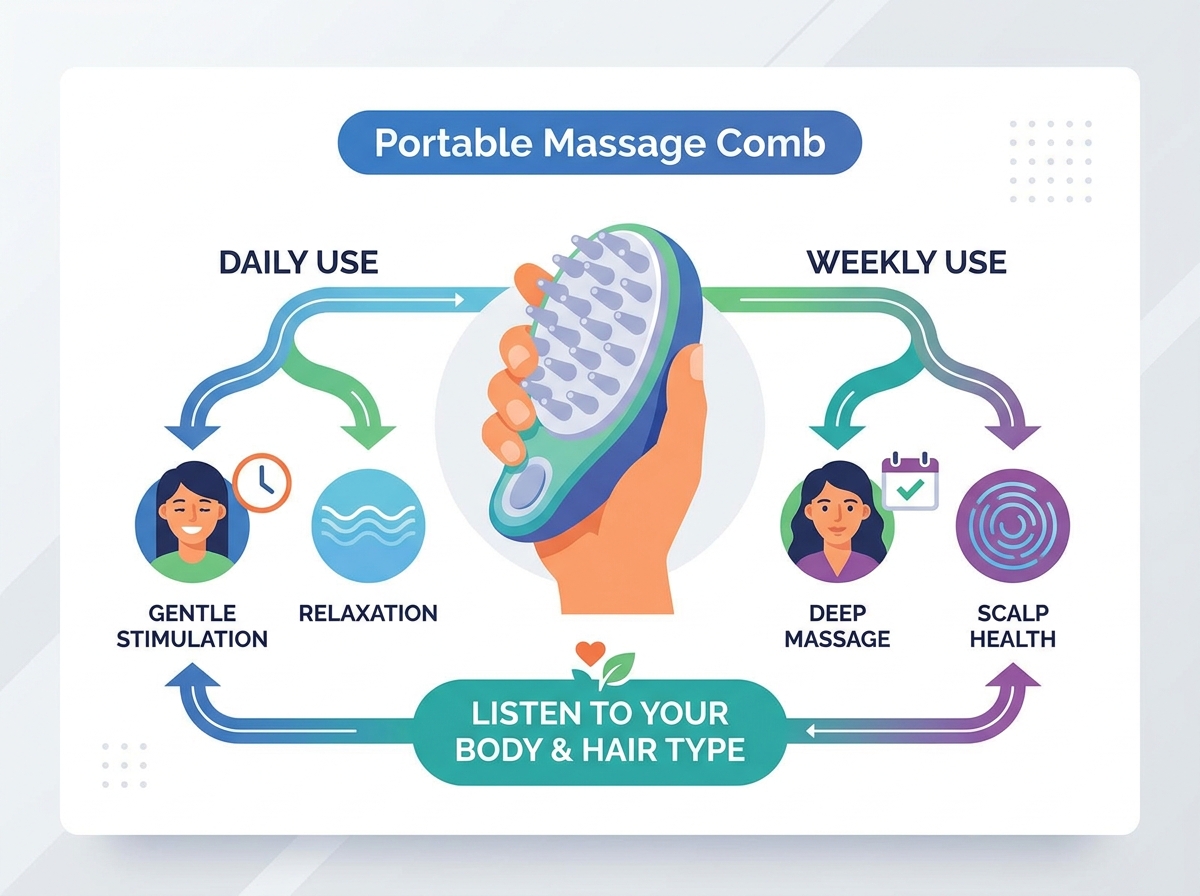
A daily dry routine benefits individuals seeking quick tension relief, those with dry hair profiles, or users with very short hair. Dry friction carries a higher risk of cuticle damage, making the choice of tool critical. You must use gentle, flexible bristles to navigate the scalp without snagging. A Portable Massage Comb with soft silicone nodes is ideal for this application. Keep these daily sessions brief—under five minutes—focusing on gentle pressure rather than aggressive scrubbing to maintain scalp integrity while promoting daily micro-circulation.
Targeted nightly routines are designed specifically for users applying leave-in scalp treatments. Nightly mechanical pressure temporarily alters the stratum corneum's permeability, allowing active ingredients to absorb efficiently overnight while the body undergoes cellular repair. Apply your chosen topical, wait a few moments for initial absorption, and then gently press the tool into the treated areas. This routine should take no longer than three minutes. Consistency here is far more valuable than duration.
For new users evaluating mechanical stimulation for active hair growth, two to three times per week is the safest starting point. This 15-minute routine, performed right before washing, stimulates robust blood flow and preps the scalp for deep cleansing. Alternating days allows the scalp tissue to recover from the physical friction while maintaining a consistent schedule of vascular stimulation. This frequency prevents the tenderness and micro-inflammation often associated with daily aggressive use.
Users with sensitive scalps, underlying inflammatory conditions, or those who heavily rely on styling products should default to a weekly deep cleanse. This routine focuses strictly on in-shower use. The water and shampoo provide necessary slip, reducing friction. Spend five to seven minutes working a clarifying shampoo into the roots. This weekly cadence ensures the scalp remains clean and oxygenated without triggering flare-ups of conditions like seborrheic dermatitis or psoriasis.
The material of the bristles dictates the maximum safe duration and frequency of your sessions. Medical-grade silicone is highly flexible and forgiving, supporting daily use without compromising the epidermal barrier. Tools made from hard plastic or metal lack flexibility. These rigid materials easily cause micro-tears in the skin if used too frequently or with too much pressure. Harder materials should be strictly limited to weekly use, primarily for deep exfoliation or detangling thick hair profiles where silicone might bend too easily.
Bristle Material | Flexibility | Recommended Frequency | Primary Use Case |
|---|---|---|---|
Medical-Grade Silicone | High | Daily to 3x/Week | Serum application, relaxation, daily circulation |
Hard Plastic | Low | 1x/Week | Deep in-shower exfoliation, thick hair detangling |
Metal Nodes | None | 1x/Week (Max) | Targeted acupressure, heavy dandruff removal |
Electric massagers provide consistent, motorized pressure, removing the physical fatigue of manual massaging. They carry a significantly higher risk of tangling long hair if used too frequently or carelessly. The rotational nodes quickly catch and wrap strands, leading to mechanical breakage. Limit electric massager sessions to 5-10 minutes to prevent motor-induced friction burns and hair snapping. Manual tools offer superior control, allowing the user to adjust pressure instantly upon feeling a snag, making them safer for higher-frequency applications.
Maintaining a consistent routine is often derailed by travel or busy schedules. A compact tool ensures you do not miss applications of expensive serums or skip circulation sessions. Portability directly impacts habit formation; keeping a tool at your desk or in your travel bag encourages mid-day tension relief and long-term adherence to a scalp care regimen. The physical act of using the tool becomes integrated into daily life rather than remaining a cumbersome chore restricted to the bathroom.
The physical mechanics of hair length drastically alter how a tool should be used. Users with short hair (under 1cm) can massage freely using circular motions without fear of tangling. Hair longer than 1cm is highly prone to being pulled out or snapped by rotational movements. To mitigate this, long-haired users must employ the press and lift technique. Press the nodes firmly into the scalp, massage the skin in a localized spot by moving the scalp itself, lift the tool completely, and reposition it. Decrease frequency if you notice increased shedding or snapped strands along the crown.
Overuse leads directly to scalp irritation. Warning signs include tenderness to the touch, persistent redness, micro-tears, and compensatory seborrhea, where the scalp overproduces oil to combat excessive dryness caused by over-exfoliation. If any of these symptoms appear, implement a strict mitigation framework. Cease all mechanical stimulation for 7 to 10 days to allow the lipid barrier to heal. Upon resuming, reintroduce the tool at exactly half the previous frequency and duration.
High-frequency use demands high-frequency cleaning. Every time the tool touches your head, it collects sebum, dead skin cells, and product residue. Failing to clean the device means you actively reintroduce old oils and bacteria to your scalp during the next session. This creates an ideal breeding ground for fungi like Malassezia, which drives dandruff and inflammation. Sanitize the tool weekly using warm water and an antibacterial soap, ensuring no moisture remains trapped in the base of the bristles.
Establishing the correct frequency for scalp stimulation protects your hair follicles from mechanical damage while ensuring you reap the circulatory benefits. The ideal frequency sits at 2-3 times a week for 15 minutes pre-shower for robust hair growth, nightly for 2-3 minutes when applying active serums, or once a week for deep relaxation and exfoliation. Deviating from these baselines without assessing your hair length and scalp tolerance risks unnecessary shedding and irritation.
Assess your current scalp health and identify any existing irritation, dryness, or excessive shedding before starting a new routine.
Select a Massage Comb with bristle materials that match your hair length, thickness, and intended usage frequency.
Commit to a strict 30-day trial at the baseline frequency of three times per week, monitoring your scalp's response before making any adjustments.
Implement a weekly sanitization schedule for your tool to prevent bacterial buildup and scalp infections.
A: Yes, but with caution. Hair elasticity changes when wet, making it more fragile and prone to stretching and snapping. Always use the tool with plenty of slip, such as a rich lather from shampoo or a generous coating of conditioner, to minimize friction and prevent breakage.
A: Proper use does not cause hair loss. It is normal to see resting phase hairs dislodge during a massage. Aggressive circular scrubbing, especially on long hair, causes traction alopecia and mechanical breakage, which is often mistaken for actual hair loss.
A: It can, if used incorrectly. Hair longer than 1cm easily wraps around bristles during circular motions. To prevent pulling, strictly use the press and lift technique: press the tool down, move the scalp tissue, lift the tool completely, and place it on the next section.
A: A daily dry scalp massage is safe and beneficial for relaxation and mild circulation, provided you use a gentle manual tool with soft silicone bristles. Keep the sessions brief, under five minutes, to avoid damaging the hair cuticles through excessive dry friction.
A: For general blood flow stimulation and hair growth, aim for 15 minutes per session, 2-3 times a week. For applying nightly serums, 2-3 minutes is sufficient. Electric massagers should be limited to 5-10 minutes to prevent motor-induced friction and tangling.


