
Views: 0 Author: Site Editor Publish Time: 2026-08-04 Origin: Site
The rapid commoditization of scalp care tools has flooded the market with aggressive marketing claims promising dramatic hair growth and instant scalp transformation. Consumers are rightly skeptical, frequently asking whether these tools actually deliver physiological results or if they are simply an aesthetic marketing gimmick. Separating scientifically plausible benefits from exaggerated hype is a core challenge. Users struggle to justify the purchase or select the correct tool for their specific dermatological needs without clear, evidence-based guidance.
This guide serves as an objective evaluation framework to unpack the verifiable benefits of a Massage Comb. We will assess different material types, analyze their physiological impacts, and determine how to integrate these tools safely into a daily hair care regimen to optimize scalp health without causing mechanical damage.
Circulation & Delivery: Mechanical stimulation from a massage comb demonstrably increases localized microcirculation, optimizing oxygen and nutrient delivery to hair follicles to support the natural hair production cycle.
Exfoliation vs. Damage: When used correctly, these tools effectively remove sebum, dandruff flakes, and product buildup; however, improper technique or overly rigid materials can cause micro-tears and mechanical hair breakage.
Treatment Synergy: The primary clinical value of a scalp massager brush lies in its ability to enhance the absorption and efficacy of topical treatments (e.g., minoxidil, rosemary oil, serums) rather than acting as a standalone cure for genetic alopecia.
Material Matters: The choice between silicone bristles, traditional Gua Sha materials (jade, wood, horn), and electric nodes dictates the tool's appropriate use-case (wet vs. dry, cleansing vs. deep tension relief).
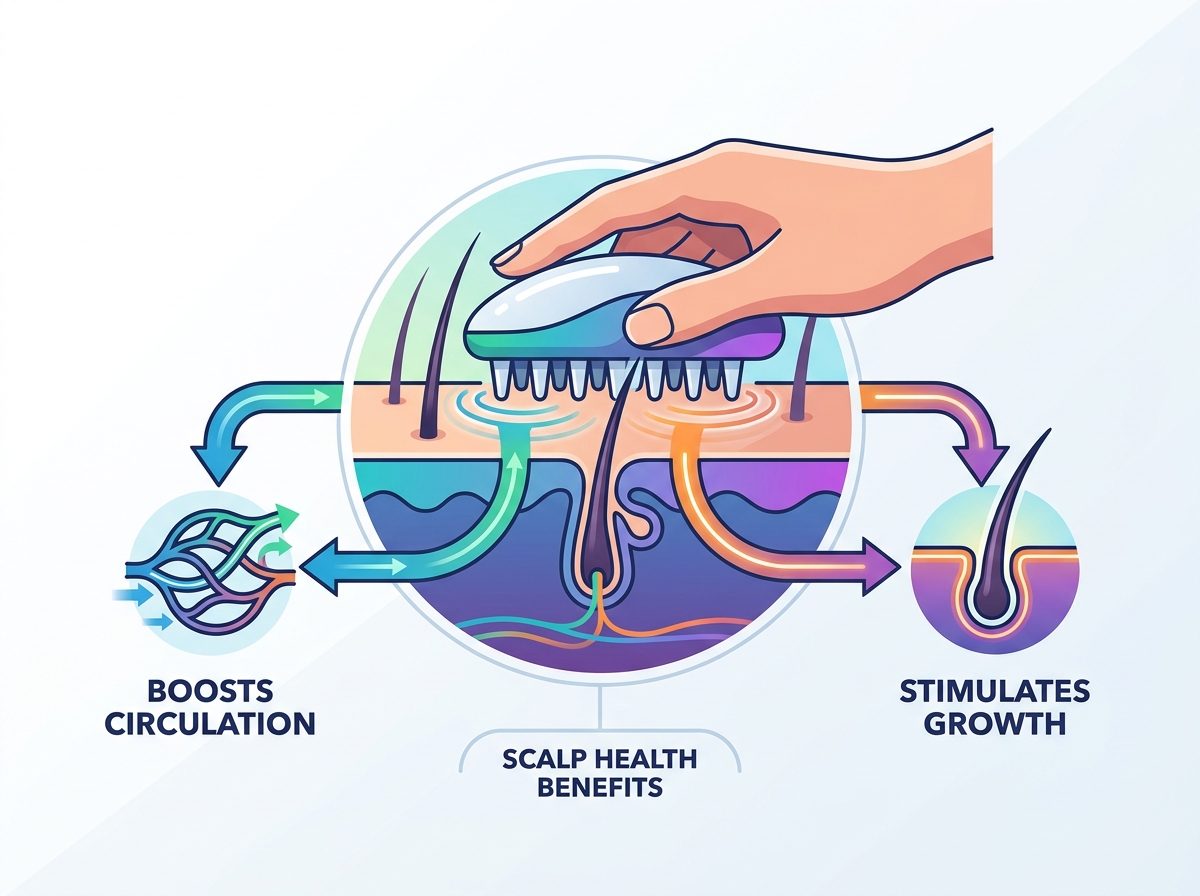
Defining actual scalp health requires looking at specific physiological markers: balanced sebum production, absence of localized inflammation, optimal blood flow, and strong follicle anchoring. Evaluating a tool’s impact means measuring it against these specific success criteria rather than vague aesthetic promises. The scalp is an extension of facial skin, yet it is thicker, has a higher density of sebaceous glands, and houses terminal hair follicles that require massive amounts of metabolic energy to function properly.
The biomechanics of sustained, gentle pressure dilate local blood vessels in the scalp. This vasodilation increases microcirculation, which is a biological requirement for maintaining the anagen (growth) phase of the hair cycle. Hair follicles require a continuous supply of oxygen and nutrients delivered via the bloodstream to synthesize keratin and build the hair shaft. Consistent microcirculation theoretically supports hair strand diameter and structural strength by ensuring the dermal papilla remains actively nourished.
When you apply physical pressure to the scalp tissue, endothelial cells lining the blood vessels respond to the mechanical stress by releasing nitric oxide. This molecule acts as a potent vasodilator, widening the capillaries and allowing a surge of nutrient-rich blood to flood the follicular bed. While a comb cannot revive dormant follicles that have completely miniaturized, optimizing this delivery system creates the best possible environment for existing active follicles to produce thick, resilient hair strands.
A healthy scalp requires the regular removal of keratinized skin cells, environmental pollutants, dandruff flakes, and stubborn product buildup. Modern hair care routines often involve dry shampoos, heavy silicones from conditioners, and styling polymers that create a suffocating film over the scalp. The physical action of the bristles dislodges these debris layers far more effectively than water and manual lathering alone.
Clearing the follicular ostia (the pore opening) prevents comedonal acne on the scalp and mitigates the risk of folliculitis. By preventing the accumulation of hardened sebum, the scalp maintains a balanced microbiome. Malassezia, the yeast responsible for dandruff and seborrheic dermatitis, feeds on excess sebum. By mechanically sweeping away this food source and lifting the barrier of dead skin, you reduce the likelihood of fungal overgrowth and maintain a clear, breathable scalp environment.
The galea aponeurotica is the dense fibrous tissue covering the upper part of the cranium. Tension in this scalp musculature and fascia often leads to tension headaches and localized tightness. A tight scalp physically restricts blood flow to the upper cranium, which is often where hair thinning is most prominent. Tactile stimulation provides significant myofascial release, relaxing these tissues and restoring pliability to the scalp skin.
Neurologically, this targeted pressure reduces cortisol levels. Stress-induced cortisol spikes can trigger telogen effluvium, a condition where a disproportionate number of hairs prematurely enter the shedding phase. Replicating professional salon-grade therapies at home offers consistent tension mitigation. The correct technique involves pressing the comb into the scalp and moving the skin over the skull in small circles, rather than dragging the bristles across the hair, which maximizes the release of fascial tension.
Critically assessing marketing claims requires an evidence-oriented lens. We must separate features from actual physiological outcomes to understand what these tools can and cannot achieve. The industry often conflates "creating a healthy environment for growth" with "curing hair loss," which misleads consumers.
Current dermatological consensus acknowledges that mechanical stimulation stretches dermal papilla cells, which can positively impact gene expression related to hair thickness. Studies have shown that mechanical stress can upregulate certain growth factors like Vascular Endothelial Growth Factor (VEGF). However, a Scalp Massager Brush primarily supports a healthy growth environment. It cannot resurrect dead follicles or cure genetic androgenetic alopecia (pattern baldness).
Users should view the tool as a supportive mechanism for optimizing the hair cycle rather than a standalone medical treatment. If hair follicles are highly sensitive to Dihydrotestosterone (DHT), mechanical massage alone will not override that genetic programming. Furthermore, hair grows at an average rate of half an inch per month. Any visible changes in hair density or thickness resulting from improved scalp health will take a minimum of three to six months to evaluate accurately.
The most significant clinical value of these tools is their synergy with topical treatments. Using a brush improves the uniform distribution of active ingredients like peptides, ketoconazole, or minoxidil across the scalp surface. When applying expensive serums with your fingers, the skin on your hands absorbs a significant portion of the product. Silicone or hard bristles do not absorb liquid, ensuring that 100% of the active ingredients reach the intended target.
When integrating natural botanical treatments, such as rosemary or castor oil, the bristles help work the product past the dense hair canopy directly onto the skin. You can part the hair, apply drops of the serum or oil directly to the scalp, and use the comb to press and wiggle the product into the epidermis. Furthermore, the increased blood flow post-massage theoretically improves the systemic absorption of these topicals, maximizing their penetration and overall efficacy.
While manual massage is beneficial, a comb offers consistent pressure and a targeted surface area that human fingertips cannot match. A five-minute manual massage often tires the hands and fingers, leading to uneven pressure and incomplete coverage. A handled tool allows for sustained, even pressure using the larger muscles of the arm and shoulder, preventing fatigue.
From a hygiene perspective, using a dedicated tool spares fingernails, avoids the transfer of hand-borne bacteria to the scalp, and prevents accidental scratching or micro-tearing of the skin. Many people unknowingly harbor bacteria under their nails. Aggressively massaging the scalp with unwashed hands can introduce this bacteria into freshly opened hair follicles, causing inflammation. A sanitized comb eliminates this variable entirely.
Categorizing market offerings helps buyers match the specific tool to their operational and hair care requirements. Different materials serve entirely different physiological purposes, and using the wrong tool for a specific task can cause more harm than good.
These tools are flexible, waterproof, and usually feature thick, conical silicone bristles. They are best suited for in-shower use. The silicone material is ideal for shampoo emulsification, deep cleansing, and lifting wet debris. The conical shape of the bristles prevents hair from wrapping around them and tangling during the washing process.
Because the bristles yield under pressure, they are highly recommended for sensitive scalps prone to irritation. They provide a safe level of exfoliation without scratching the epidermal layer. When shopping for these, look for single-piece, medical-grade silicone construction, as multi-part plastic and silicone tools can trap water and breed mold inside the casing.
Traditional holistic designs utilize rigid, smooth-edged materials optimized for acupressure. These are best utilized for dry scalp massage, meridian-line scraping, and intense myofascial release. Materials like jade offer a naturally cooling effect, while sandalwood provides a smooth finish that glides easily over the skin.
Due to their lack of flexibility, they are not recommended for wet hair or detangling. Wet hair is highly elastic and fragile; the rigidity of a hard comb can easily snap weakened wet strands. They excel in targeted tension relief rather than broad cleansing. The scraping technique used with these tools involves holding the comb at a shallow angle and applying firm, sweeping strokes to release deep fascial restrictions.
Battery-operated models feature oscillating nodes and sometimes incorporate red light therapy (LED) or microcurrents. These are designed for users seeking automated tension relief and passive scalp stimulation. The specific frequencies of vibration can effectively stimulate nerve endings, providing profound relaxation without requiring manual effort.
They support multi-modality treatments but require a higher budget and routine maintenance. While some feature 650nm red light intended to boost cellular ATP production, users should note that the LEDs in handheld combs are often underpowered compared to clinical laser helmets. These tools require careful cleaning with damp cloths rather than full submersion to protect the electronic components.
Selecting the correct design requires understanding the conceptual trade-offs between different bristle types, materials, and ergonomic profiles. A tool that works perfectly for fine, straight hair may be completely useless for thick, coily hair.
Tool Type | Best Hair Type | Primary Application | Key Benefit |
|---|---|---|---|
Silicone Bristle | Fine, Thin, Fragile | Wet (In-Shower) | Gentle cleansing, shampoo emulsification |
Hard Material (Gua Sha) | Thick, Coarse | Dry (Pre-Shower) | Deep tissue tension relief, acupressure |
Electric/Vibrating | All Hair Types | Dry (Therapeutic) | Automated stimulation, multi-modality care |
Fine, thin, or fragile hair requires soft, widely spaced, flexible silicone bristles to prevent pulling and mechanical stress on the follicle. If the bristles are too stiff, they can cause traction alopecia over time. Conversely, thick, coarse, curly, or coily hair requires firmer, longer, or more tapered bristles.
If the bristles are too soft on thick hair, they will merely glide over the hair canopy without successfully penetrating to contact the scalp skin directly, rendering the massage ineffective. You can test bristle firmness by pressing the tool against the palm of your hand; it should yield slightly but maintain its structural integrity. For curly hair, wider bristle spacing is mandatory to prevent the tool from getting stuck in the curl pattern.
The structural integrity of the material dictates its application. Wood and horn can degrade, warp, or splinter when exposed to water, styling products, and surfactants, making them strictly for dry use. Silicone thrives in wet environments and is impervious to chemical degradation from standard shampoos.
When performing a dry massage with a hard tool, users must assess the slip required to prevent friction. Water swells the hair shaft, lifting the cuticle and making it vulnerable to friction from hard materials. Therefore, dry massage often necessitates the application of hair oils to create a protective barrier. Wet applications rely on the natural slip provided by shampoo lather to prevent hair pulling.
Handle design significantly impacts usability, especially in wet environments. Palm-held designs with finger-loops offer superior control in slippery showers. A tool that drops in the shower can break or cause foot injuries. Look for textured grips or silicone straps that secure the tool to your hand.
Traditional handle designs may provide better leverage for dry tension relief, allowing you to reach the back of the head easily. Users with limited grip strength, arthritis, or dexterity issues should prioritize lightweight, ergonomically contoured models that do not require excessive pinch-strength to operate effectively.
Improper use of scalp tools can lead to adverse outcomes. Understanding implementation risks is critical for maintaining hair integrity and scalp health. More pressure and more frequency do not equate to better results.
Aggressive circular scrubbing motions cause severe tangling and mechanical breakage. Users must utilize small, localized pressing, or linear movements. The correct "press and release" technique involves placing the tool on the scalp, applying pressure, moving the scalp skin slightly, releasing the pressure, lifting the tool entirely, and placing it in a new spot. Never drag the bristles through the hair.
Wet hair is highly fragile due to the temporary weakening of hydrogen bonds. Improper, forceful use of a massager brush on wet hair can strip the cuticle and snap the hair shaft. Always apply gentle pressure and let the tips of the bristles do the work. If you hear a tearing sound or feel significant resistance, you are applying too much force or using the wrong technique.
Massaging too frequently, for too long, or with excessive pressure risks triggering reactive seborrhea, where the scalp overproduces oil to compensate for stripped moisture. The scalp has a delicate acid mantle that protects against bacterial invasion. Over-scrubbing alters the pH and removes beneficial lipids.
It can also cause contact dermatitis or compromise the epidermal barrier. Limit use to three to five minutes per session. Monitor the scalp closely for signs of redness, tenderness, or increased flaking. If you notice these symptoms, you are over-exfoliating and need to reduce the frequency of use immediately.
Damp bathroom environments create a high risk for bacterial and fungal growth, particularly in hollow, multi-part, or wooden massagers. Biofilms can easily form on silicone if it is not scrubbed regularly. Strict cleaning protocols are mandatory to prevent introducing pathogens to your scalp.
Disassemble multi-part tools if possible. Wash them thoroughly with antibacterial soap and warm water after every single use. Use a small brush to clear out any dead skin or product residue trapped at the base of the bristles. Ensure complete air-drying in a well-ventilated space outside the shower enclosure to prevent mold accumulation. A monthly soak in a mild vinegar solution or rubbing alcohol is recommended for silicone tools to ensure complete sanitation.
Integrating a scalp tool is a highly effective, low-cost adjunct to a comprehensive hair care routine, provided users maintain realistic expectations regarding physiological outcomes. It optimizes the scalp environment, enhances topical absorption, and provides excellent tension relief, but it is not a standalone cure for genetic hair loss.
Evaluate your primary scalp concern to determine if you need cleansing (silicone) or tension relief (hard materials).
Select a tool with a bristle density and firmness that matches your specific hair type to avoid mechanical breakage.
Integrate the tool into your routine 2-3 times a week, monitoring your scalp's tolerance to the physical exfoliation.
Implement a strict hygiene protocol, washing and air-drying the tool outside the bathroom after every wet application.
A: For most users, 2 to 3 times a week is optimal. This frequency provides sufficient stimulation and exfoliation without risking epidermal barrier disruption or reactive oil production. Daily use is generally only recommended if applying very gentle pressure during a brief topical serum application.
A: When used correctly, it does not cause hair loss. However, aggressive scrubbing or dragging the tool through tangled wet hair can cause mechanical breakage. It may dislodge hairs already in the shedding (telogen) phase, which is a normal part of the hair cycle, but it does not pull out healthy, anchored hair.
A: It depends on the material. Silicone brushes are excellent for wet hair to emulsify shampoo and clear debris. Hard materials like wood or jade should only be used on dry hair, preferably with a scalp oil to provide slip and prevent friction-induced breakage.
A: Apply light to medium pressure. The goal is to stimulate the skin and underlying blood vessels, not to scrape or scratch the scalp. If the skin feels tender or appears red after use, you are applying too much pressure.
A: Rinse the tool thoroughly with warm water and antibacterial soap after each use. Use a small brush to remove any trapped hair or product residue between the bristles. Shake off excess water and leave it to air-dry completely in a well-ventilated room, not inside the damp shower.
A: Yes, for specific tasks. A comb provides uniform pressure, covers a larger surface area efficiently, and prevents the fingernails from accidentally scratching the scalp. It is also superior for working thick foams or dense serums evenly through the hair roots without absorbing the product into your skin.


