
Views: 0 Author: Site Editor Publish Time: 2026-08-03 Origin: Site
The recent elevation of scalp care to the level of skincare has flooded the market with specialized tools, making it difficult to separate anatomical reality from marketing hype. Consumers are constantly bombarded with claims of extreme hair growth and instant stress relief, leading to widespread confusion over which tool actually addresses specific issues like product buildup, muscular tension, or poor blood circulation. Understanding the mechanical action of a Massage Comb—and evaluating the structural differences between wood, silicone, and stone—is essential for selecting a tool that delivers measurable scalp health improvements without causing friction damage or hygiene issues. By focusing on epidermal compression rather than simple hair detangling, these tools offer a targeted approach to maintaining a healthy cranial environment.
Mechanism Over Magic: A massage comb works through mechanical exfoliation and microcirculation stimulation, not by magically generating new hair follicles.
Material Dictates Function: Silicone brushes excel at wet exfoliation and product removal, while wooden and stone combs are optimized for dry sebum distribution and myofascial tension relief.
Implementation Risk: Improper usage (e.g., aggressive scrubbing on wet, fragile hair) or poor tool hygiene can lead to mechanical hair breakage and scalp bacterial imbalances.
Realistic Success Criteria: The primary verifiable outcomes of consistent use are reduced scalp flaking, improved shampoo efficacy, and temporary vasodilation (increased blood flow) to the hair roots.
To understand the efficacy of these tools, you must first contrast them with standard detangling brushes, boar bristle brushes, and dedicated shampoo scrubbers. Standard brushes are engineered primarily to separate hair strands, smooth the cuticle, and remove knots. Their bristles are often densely packed and flexible, designed to glide through the hair shaft. A dedicated scalp tool, however, is built for direct epidermal contact. The architecture prioritizes scalp stimulation and pressure distribution over hair manipulation.
Several structural differentiators set these specialized combs apart from daily styling tools. First, they feature ultra-wide tooth spacing. This specific design prevents hair snagging and pulling during direct scalp contact, allowing the teeth to bypass the hair lengths entirely. Second, the tips are blunted, rounded, or bulbous. Sharp or narrow bristles can cause micro-tears in the scalp if applied with vertical pressure. Bulbous tips ensure that the force applied translates into epidermal compression rather than scratching. Finally, the material density is typically rigid or semi-rigid. This allows for targeted, sustained pressure on specific cranial points without the teeth yielding or bending under force.
Using a standard hairbrush to perform scalp massage often fails because the flexible bristles cannot adequately target the cranial aponeurosis—the broad layer of fibrous tissue covering the upper part of the cranium. Attempting to force a standard brush into the scalp usually results in tangled hair and compromised skin integrity. A properly designed tool applies blunt force safely, stimulating the underlying tissues without damaging the protective skin barrier.
When inspecting a new tool for quality, follow these specific evaluation steps:
Press the teeth firmly against the palm of your hand to test for sharp edges or manufacturing seams that could scratch the scalp.
Measure the distance between the teeth; anything less than a quarter-inch will likely cause hair snagging during use.
Check the structural integrity of the handle or grip to ensure it will not slip when coated in shampoo or natural oils.
Examine the material for porosity, especially in wooden models, to determine if it requires immediate oiling before first use.
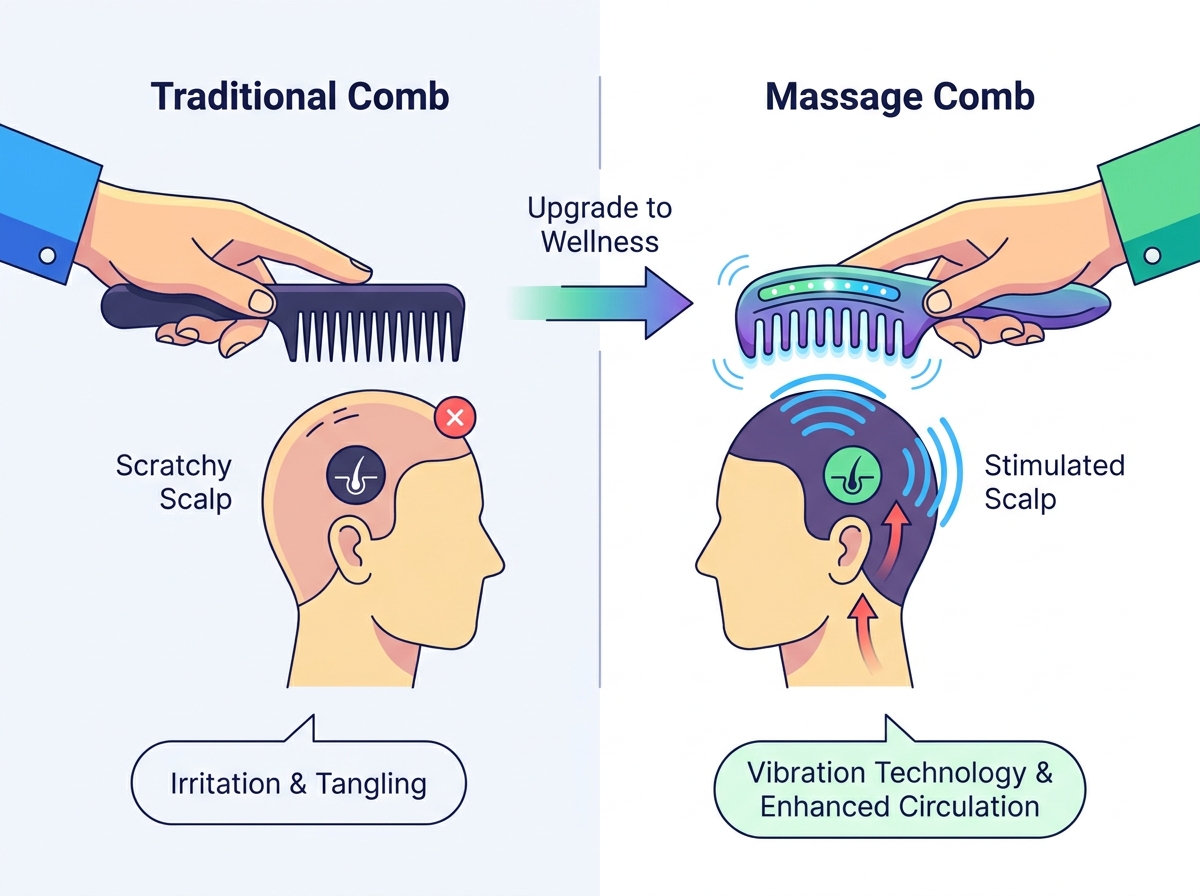
The benefits of scalp stimulation are grounded in human anatomy and mechanical action rather than superficial cosmetic claims. When you apply a Scalp Massage Comb, several physiological processes are triggered simultaneously.
The most prominent mechanism is microcirculation stimulation, clinically known as vasodilation. Localized, rhythmic pressure dilates the blood vessels just beneath the scalp surface. This temporary expansion increases the delivery of oxygen and vital nutrients to the dermal papilla, which sits at the base of the hair follicle. While this does not spontaneously create new follicles, optimizing the vascular network supports the health and anagen (growth) phase of existing hair.
Mechanical exfoliation is another critical function. The scalp produces sebum and constantly sheds dead skin cells. When combined with polymer buildup from modern styling products, this debris can harden and cause follicular occlusion. The rigid, rounded teeth of the comb physically dislodge this buildup. By lifting these impurities away from the follicle opening, the comb prevents inflammation and creates a clearer pathway for topical treatments to penetrate the skin.
For individuals using natural materials like wood, sebum distribution plays a major role in hair health. The scalp's natural lipids are essential for protecting the hair shaft. Wooden teeth absorb slight amounts of excess scalp oils and distribute them evenly down the lengths of the hair. This reinforces the hair's natural lipid barrier, reduces static electricity, and enhances natural shine without relying on synthetic serums.
Beyond the hair follicle, these tools provide significant myofascial and tension relief. The cranial aponeurosis and the suboccipital muscles at the base of the neck hold immense tension from poor posture, prolonged screen time, and daily fatigue. Deep, targeted pressure helps release this myofascial tightness, alleviating tension headaches and reducing physical strain.
Finally, the gentle sensory stimulation activates the parasympathetic nervous system. The scalp contains a dense network of nerve endings. Slow, deliberate massage strokes signal the body to shift out of a sympathetic state, promoting systemic relaxation. This physiological shift helps lower cortisol levels, reduces mental fatigue, and can significantly improve sleep quality when performed before bed.
Mechanism | Physiological Action | Direct Benefit |
|---|---|---|
Vasodilation | Expands local blood vessels | Increases oxygen and nutrient delivery to follicles |
Mechanical Exfoliation | Dislodges hardened sebum and dead skin | Prevents follicular occlusion and inflammation |
Sebum Distribution | Moves lipids from scalp down the hair shaft | Reinforces lipid barrier and reduces static |
Myofascial Release | Applies pressure to cranial aponeurosis | Alleviates tension headaches and physical strain |
The material composition of your tool directly dictates its functional capabilities, maintenance requirements, and overall lifespan. Selecting the right material requires aligning the tool's inherent properties with your specific scalp goals.
Wooden combs possess a rich historical context, particularly within traditional Ayurvedic practices like Shiroabhyanga. These practices utilize wooden tools to target specific marma (energy) points on the scalp, aiming to balance systemic energy and relieve mental fatigue. Wood is naturally anti-static, making it ideal for dry massaging. Because wood is slightly porous, it excels at absorbing and distributing natural oils evenly across the hair shaft. It is highly durable and exceptionally gentle on the hair cuticle. However, wood comes with strict trade-offs. It cannot be used in the shower. Exposure to water and high humidity makes wood highly susceptible to warping, mold growth, and splintering, which can severely damage the scalp if ignored.
Silicone tools dominate the wet-use category. They are strictly designed for shower application, shampoo emulsification, and deep cleansing. The primary advantage of silicone is its waterproof nature and high flexibility, which drastically reduces the risk of scratching the epidermis when the scalp is softened by warm water. These brushes maximize product lather, allowing you to use less shampoo while achieving a deeper clean. The main drawback is the potential for severe hair tangling. If used with aggressive, large circular motions on wet hair, silicone grips the strands and causes matting. Additionally, multi-part plastic and silicone designs can trap water inside their hollow chambers, leading to hidden mold growth.
Stone combs are specialized tools best suited for acupressure, tension relief, and cooling inflammation. The ultra-smooth surface of polished stone eliminates friction entirely, making it safe for sensitive scalps. Stone naturally retains cold temperatures, providing a soothing effect for irritated, inflamed, or hot scalps. They are also excellent vehicles for distributing expensive scalp serums, as the non-porous surface will not absorb the product. The primary trade-off is extreme fragility. Dropping a stone comb on a hard bathroom tile will likely shatter it. Furthermore, stone is significantly heavier than wood or silicone, which may cause hand fatigue during prolonged massage sessions.
Achieving measurable results requires matching the specific material and technique to your current scalp condition. A one-size-fits-all approach often leads to frustration and potential scalp irritation.
If you struggle with dandruff and heavy product buildup, wet exfoliation is necessary. Pair a silicone tool with a clarifying shampoo or a chemical exfoliant containing salicylic acid. The chemical agent dissolves the bonds between dead skin cells, while the silicone teeth physically lift the flakes away from the scalp. This combination ensures a thoroughly cleansed follicular environment.
For those addressing hair thinning and seeking follicle support, it is crucial to frame realistic expectations. A massage tool is a supplementary practice, not a standalone cure for androgenetic alopecia. Recommend dry massage using wooden or stone combs to support long-term vascular health. Consistent stimulation optimizes oxygen delivery to the existing follicles, creating the best possible environment for hair retention and the efficacy of topical growth treatments.
If your primary goal is tension and stress relief, prioritize ergonomic grip designs and wide-tooth gua sha stone combs. These tools allow for targeted pressure point therapy. Focus the application along the back of the neck, the jawline, and the temples to release muscular holding patterns and alleviate daily stress.
Improper technique is the leading cause of mechanical hair damage and scalp irritation. Adhering to strict application protocols ensures you extract the benefits of the tool without compromising your hair's structural integrity.
Wet hair is highly elastic and prone to snapping under tension. Never drag a tool through the lengths of wet hair. First, apply your shampoo, scalp scrub, or treatment oil directly to the roots to create a protective slip. Place the comb against the scalp and use small, pressing circular movements. Lift the tool completely off the scalp before repositioning it to a new section. This press-and-lift method prevents the hair from wrapping around the teeth and matting.
Dry application focuses on stimulation and oil distribution. Section your dry hair to ensure direct comb-to-scalp contact. Execute 10 to 20 slow, deliberate strokes. Start from the front hairline and move backward toward the crown, then proceed down to the nape of the neck. Keep the pressure firm but comfortable, ensuring the teeth glide over the scalp without scratching.
To combat the physical strain of modern desk work, utilize the tool on the suboccipital region. Run the comb slowly up and down the back of the neck, applying sustained pressure to the muscle bands just below the skull base. Perform 10 to 20 strokes in this area. Focus specifically on spots that feel tight or tender, allowing the blunt teeth to release myofascial tightness accumulated from phone and computer usage.
More is not always better. Over-stimulating the scalp can lead to epidermal irritation, tenderness, and increased oil production as the scalp tries to defend itself. Establish a baseline routine of 3 to 5 minutes daily for dry massage. Limit wet exfoliation with silicone tools to 1 or 2 times weekly. This frequency provides optimal stimulation while preventing diminishing returns and skin barrier compromise.
A poorly maintained tool introduces bacteria and fungi directly into the scalp environment, exacerbating conditions like dandruff and folliculitis. Strict cleaning protocols based on material are non-negotiable.
For silicone and plastic tools, hygiene requires vigilance. If the tool features a multi-part design, disassemble it completely after every few uses. Scrub all components with antibacterial soap and warm water. Allow them to air dry completely in a well-ventilated area before reassembly to prevent mildew buildup inside the water chamber.
Wooden tools require moisture avoidance. Never soak a wooden comb. Clean it by wiping the teeth with a dry or slightly damp cloth to remove debris. To maintain the wood's integrity, periodically re-oil it using a few drops of jojoba, neem, or linseed oil. This prevents the wood from drying out, cracking, and developing micro-splinters that could tear the scalp.
Stone tools are the easiest to sanitize but require careful handling. Wash the stone with mild soap and water immediately after each use, especially if used with scalp serums or oils. Dry it with a soft towel and store it in a padded pouch or secure drawer to eliminate the risk of accidental drops.
Knowing when to replace your tool is critical for safety. Inspect your equipment regularly. Look for degraded, sticky, or missing silicone tips. Check stone tools for micro-cracks or chips along the teeth. For wood, feel for any rough patches or splintering. If any of these signs of wear appear, replace the tool immediately, as compromised surfaces will actively damage the epidermal layer.
A massage comb is a highly effective, low-risk addition to a comprehensive hair care regimen, provided its mechanical limitations are understood and respected. It excels at physical exfoliation, myofascial tension relief, and localized microcirculation, but it requires consistent, gentle application to yield verifiable results. Choosing the right tool comes down to matching the material to your primary objective. Choose a silicone brush if your primary goal is a cleaner scalp and better shampoo lather during wash days. Opt for a wooden or stone comb if your focus is daily tension relief, traditional Ayurvedic practices, sebum distribution, and dry stimulation.
Audit your current scalp concerns to determine if you need wet exfoliation for buildup or dry stimulation for tension and circulation.
Select the corresponding material based on your audit: silicone for wet use, or wood and stone for dry use.
Integrate a strict 3-minute massage protocol into your routine two to three times this week.
Monitor your scalp for reductions in flaking, improvements in tension, or changes in oil distribution to establish a baseline for long-term results.
A: They do not cure hair thinning or magically generate new follicles. They work by increasing microcirculation and oxygen delivery to the dermal papilla, which supports the health of existing hair and creates an optimal environment for topical growth treatments to function effectively.
A: You can use silicone tools on wet hair, provided you use a press-and-lift motion. Dragging any tool through wet, fragile hair will cause severe mechanical breakage and matting. Always apply shampoo or oil first for slip.
A: A regular hairbrush detangles hair lengths. A shampoo brush is designed strictly for wet lathering and exfoliation. A massage comb features rigid, wide-spaced teeth specifically engineered for dry epidermal compression and tension relief.
A: For dry massage using wood or stone, 3 to 5 minutes daily is optimal for tension relief and circulation. For wet exfoliation using silicone, limit usage to 1 to 2 times per week to avoid irritating the scalp barrier.
A: Never soak wood in water. Wipe it clean with a dry or slightly damp cloth. Periodically rub a few drops of jojoba or linseed oil into the wood to prevent it from drying, cracking, and forming dangerous splinters.
A: Yes. Aggressive scrubbing, especially with rigid tools, can cause micro-tears in the epidermis, leading to inflammation, bacterial infection, and traction alopecia. Always apply firm but gentle, controlled pressure.
A: In Ayurveda, wooden combs are used in practices like Shiroabhyanga to stimulate specific marma points on the head. The natural wood is believed to balance systemic energy, distribute natural oils, and relieve mental fatigue without generating static electricity.


