
Views: 0 Author: Site Editor Publish Time: 2026-10-29 Origin: Site
Tired of watching your hair thin out daily? Finding a real solution often feels completely impossible when you are staring at a bathroom sink full of fallen strands. While the market is flooded with questionable serums and expensive clinic treatments, a Hair Growth Comb offers a convenient, non-invasive fix right in the comfort of your own home.
Before you invest in a hair restoration device, it is crucial to understand that not all products deliver the same results. Some are backed by rigorous optical science and structural engineering, while others are little more than glowing plastic toys. In this comprehensive guide, we break down exactly what specifications, design elements, and safety features you must check first. This engineering perspective ensures you make an informed decision that actively supports your scalp health without wasting time or money.
Looking at recent market data and engineering advancements, the hair restoration sector is experiencing a massive transformation. Consumers are rapidly shifting away from expensive, time-consuming clinical visits. Instead, there is a surging demand for professional-grade, at-home devices. This shift is primarily driven by the miniaturization of optical components. What used to require a bulky, stationary machine can now fit into a sleek, handheld unit.
Furthermore, modern users expect multi-functional tools. They want devices that combine precise light therapy, physical massage, and liquid serum delivery into one seamless routine. This convergence of technologies is setting a new standard for daily scalp care, forcing manufacturers to upgrade their internal components to meet clinical standards in a consumer-friendly format.
To navigate the crowded market of at-home devices, keep these fundamental engineering principles top of mind:
Wavelength Accuracy: The effectiveness of light therapy depends heavily on the specific output. Ensure the device utilizes clinically proven red light, strictly falling in the optimal 650nm range.
Optical Power: Medical-grade lasers offer deeper, focused penetration to reach the follicle root. Standard LEDs provide broader surface coverage. The most effective devices often integrate both technologies.
Dual-Action Features: Top-tier tools do not rely on illumination alone. They integrate physical mechanical stimulation to boost local blood circulation and enhance follicle vitality.
Safety Standards: Never compromise on your well-being. Always verify medical certifications and look for intelligent skin-sensing safety switches.
Ergonomic Usability: A treatment only works if you actually use it consistently. Battery life, weight distribution, and liquid-guiding tooth design dictate how easily you can integrate the therapy into your busy routine.
When evaluating these tools, skeptical consumers often ask whether the underlying technology actually works or if it is merely a clever marketing gimmick. The foundation of legitimate hair restoration is a medically recognized treatment known as Low-Level Laser Therapy. This non-invasive therapy utilizes specific wavelengths of light to interact with tissue at a microscopic, cellular level.
To understand how this combats thinning, we must look at cellular energy dynamics. Hair follicles require a massive amount of energy to maintain the active growth phase, known as anagen. When therapeutic red light penetrates the scalp tissue, it is absorbed by the mitochondria, which act as the powerhouses of your cells. This absorption directly stimulates the production of Adenosine Triphosphate, the primary carrier of cellular energy. With increased energy production, dormant or weakened hair follicles receive the biological boost they need to shift from the resting phase back into active growth.
Consequently, many modern devices now function as a comprehensive Red Light Scalp Massager. By combining the biochemical stimulation of targeted light with the mechanical action of physical massage, these advanced tools help to significantly prolong the anagen phase of the hair cycle.
Nevertheless, setting realistic expectations is vital. Hair grows notoriously slowly, typically averaging about half an inch per month. Clinical studies consistently indicate that users must maintain a strict treatment schedule for a minimum of three to six months before noticing visible improvements in density and thickness.
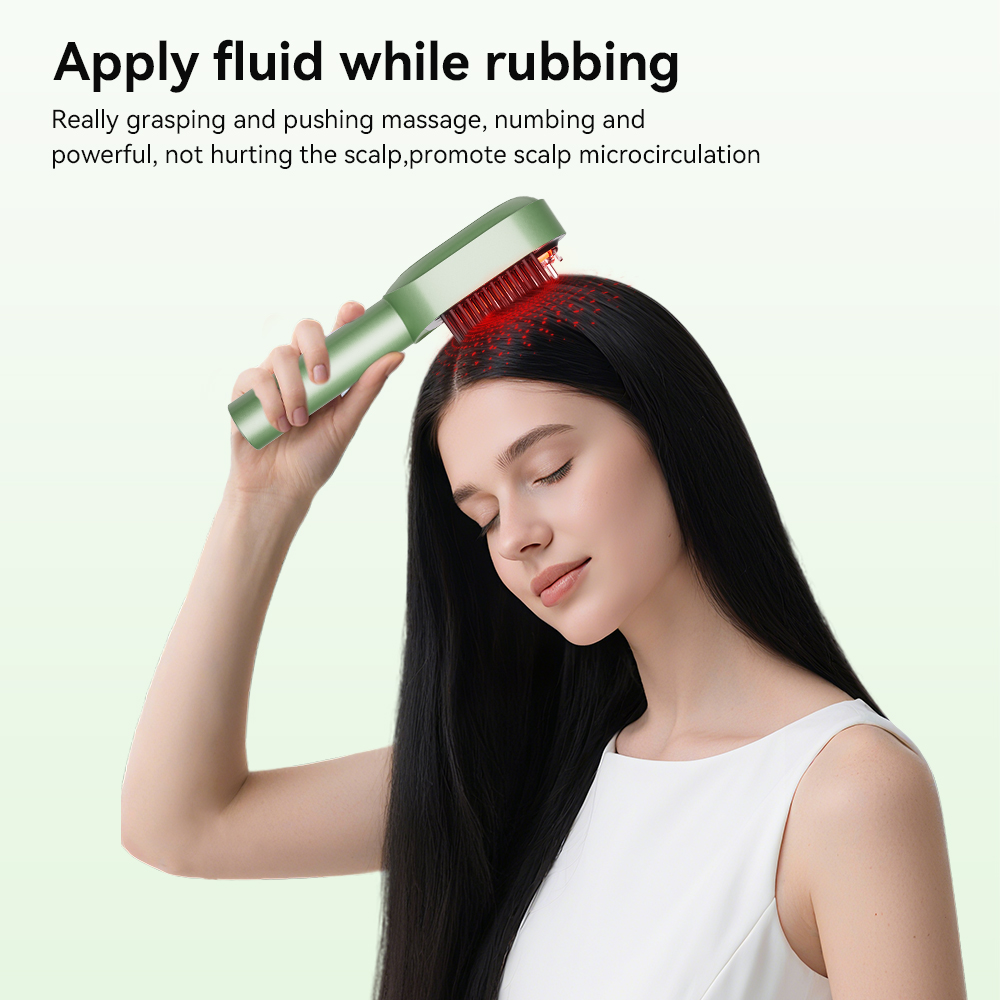
Not all light-emitting gadgets are created equal. When shopping for a reliable Hair Care Comb, examining the technical specifications is the single most critical step in your purchasing journey. The type of light, the exact wavelength, and the structural design will directly dictate the efficacy of your daily treatment.
The most significant distinction you will encounter on a spec sheet is between lasers and standard diodes. Lasers produce coherent light, meaning the light waves move perfectly in phase with one another. This creates a tightly focused, concentrated beam of energy capable of penetrating the skin deeply. Conversely, standard diodes produce non-coherent light, which is excellent for superficial skin treatments and providing broad coverage. High-quality devices strategically combine the deep penetration of lasers with the broad coverage of standard diodes to maximize the treatment area without sacrificing depth.
The wavelength of the light determines exactly how deeply the energy can penetrate your skin. For hair regrowth, optical engineering research has repeatedly proven that the sweet spot is exactly 650nm. Light within this specific red spectrum is optimally absorbed by the hair follicles without generating harmful heat. If a manufacturer obscures or fails to state the exact wavelength of their device, consider it a massive red flag.
Feature Comparison |
Basic LED Devices |
Professional 3-in-1 Devices |
|---|---|---|
Optical Output |
Broad surface LEDs, unspecified wavelengths |
Precise 650nm Red Light, laser/LED hybrid |
Mechanical Action |
None or low-grade rumble |
High-frequency micro-vibration |
Serum Delivery |
Manual application required |
Integrated liquid guiding teeth |
Overall Value |
Entry-level curiosity, limited results |
Serious at-home restoration, high ROI |
While light therapy handles the cellular energy side of hair restoration, mechanical stimulation addresses the physical environment of the scalp itself. Opting for a device that includes a vibrating Massage Comb function can dramatically amplify your overall results.
Hair follicles are highly dependent on a robust, continuous blood supply. Blood carries the oxygen, essential vitamins, and vital nutrients required for keratin synthesis. The gentle, high-frequency vibration of a massage feature stimulates the tiny capillaries just beneath the surface of the skin. This localized vasodilation ensures that the follicles being treated with red light are simultaneously receiving maximum nutritional support from your own body.
Many individuals dealing with thinning hair also incorporate topical treatments into their routine, such as minoxidil or nutrient serums. The outermost layer of the skin is naturally designed to keep foreign substances out, making topical absorption a frustrating challenge. Premium devices solve this engineering hurdle by featuring liquid guiding teeth. These specially designed prongs dispense your favorite serums directly onto the scalp while the mechanical vibration temporarily disrupts the skin barrier slightly. This dual action allows the active ingredients to penetrate deeper and work far more effectively.
Because you are purchasing a device that emits raw energy directly onto your body, safety and medical validation must be at the forefront of your decision-making process. The online marketplace is unfortunately saturated with cheap, unverified electronics that offer zero clinical benefit and may even pose severe safety risks.
Advanced safety features are a hallmark of a well-engineered device. Concentrated light can be harmful if shone directly into the human eye. Therefore, top-tier tools are equipped with intelligent capacitive skin sensors. These sensors detect when the device is in physical contact with your head. The optics will only activate when pressed firmly against the skin and will automatically shut off the split second the device is lifted away.
Usability is equally critical. Even the most technologically advanced medical device is entirely useless if it sits in a bathroom drawer gathering dust. Hair restoration requires strict adherence to a treatment schedule over many months. Check the specifications for a high-capacity lithium-ion battery. A quality cordless device should offer multiple treatment sessions on a single charge. Furthermore, look for sturdy, well-spaced teeth with smooth edges that can easily navigate your specific hair texture without causing painful tangles or pulling out existing fragile hairs.
The booming market for at-home hair restoration has brought a surge of counterfeit or subpar products. Purchasing a dud costs you not just money, but valuable time. Being able to quickly identify red flags is crucial for any consumer.
The biological cycle of human hair dictates that legitimate regrowth takes time. The growth phase simply cannot be artificially rushed into producing a full head of hair in a matter of days. Always be incredibly wary of any brand promising overnight results or guaranteed cures for complete baldness. Once a hair follicle has completely died and the scalp has scarred over, non-invasive light therapy cannot magically bring it back. Legitimate brands set realistic, science-backed expectations.
Transparency is the hallmark of a reliable device. If a manufacturer is utilizing effective technology, they will proudly display their specifications. Avoid products that do not clearly list their technical data. You should always be able to find the exact light wavelength, the functional modes, and battery capacity. If a product description relies solely on vague buzzwords without providing hard numbers, walk away immediately.
Choosing the right tool for your hair restoration journey requires careful attention to detail and a basic understanding of the optical science involved. You must prioritize proper light wavelengths, insist on built-in safety mechanisms, and select a comfortable, ergonomic design that ensures you will actually use the device regularly.
Added features, such as a multi-functional Scalp Massager equipped with liquid guiding technology, can further improve your daily results by boosting vital blood flow and aiding in serum absorption. Remember that hair restoration is a marathon, not a sprint. Consistency and patience are your best allies.
Selecting a high-quality, scientifically backed device is your critical first step toward success. Stop wasting time on ineffective gadgets. Explore trusted, professional-grade options and verify the precise specifications by visiting Baichangtech to find the perfect device tailored to your proactive hair care journey today.
Consistency is the most critical factor in achieving visible results with light therapy. Typically, dermatologists and device engineers recommend using the tool three to four times a week. Each session should last between 10 to 15 minutes, depending on the specific energy output of your model. Using the device multiple times a day will not accelerate hair growth and could potentially overstimulate the scalp.
While it might seem convenient to use your device right after stepping out of the shower, it is generally advised to use these devices on clean, dry, or only very slightly damp hair. Water droplets can act as tiny prisms, refracting the light and potentially altering the energy delivery before it hits your scalp. Additionally, exposing internal circuitry to dripping wet hair could permanently damage the electronics unless the device has a specific high waterproof rating.
Setting realistic expectations is vital. Because hair naturally grows at an average rate of half an inch per month, you will not see immediate changes. Most clinical studies indicate that it takes a minimum of 12 to 24 weeks of consistent, weekly use to observe noticeable results. During the first few weeks, you might actually experience a slight increase in shedding, which is a normal process where older hairs are pushed out to make way for new, healthier growth.
One of the primary advantages of utilizing light therapy is its exceptional safety profile. It is generally painless, completely non-invasive, and free from systemic side effects. However, because the therapy actively increases local blood flow, some users might experience mild, temporary physical sensations like a slight tingling, gentle warmth, or minor scalp redness immediately following a session. These effects are harmless and typically dissipate within an hour.
Yes, combining therapies is often the most effective strategy for combating hair loss. The mechanical stimulation from the teeth can increase circulation, which greatly enhances the absorption of topicals. Devices equipped with liquid guiding systems are specifically engineered to dispense Minoxidil or nutrient serums directly to the root while simultaneously applying light therapy, making your routine significantly more efficient.
Absolutely. The physics of red light therapy work on the cellular level of the hair follicle beneath the skin, meaning your visible hair texture, curl pattern, or color does not negatively impact the biological efficacy of the treatment. Whether your hair is fine, coarse, color-treated, or naturally dark, the 650nm wavelength will safely penetrate the scalp tissue to stimulate cellular energy.
No, you do not strictly need to use serums. The combination of targeted red light and mechanical massage is highly effective on its own for stimulating blood flow and cellular energy. However, if you are already using a prescribed serum or essential oil, utilizing a device with liquid guiding teeth will exponentially improve the absorption rate of those liquids, giving you a powerful compounding effect over time.


